Inside Vibbi: How Custyle's Design Lead Orchestrates 8 Specialists

Custyle Lab
Research & Guides · Jun 27, 2026·11 min read
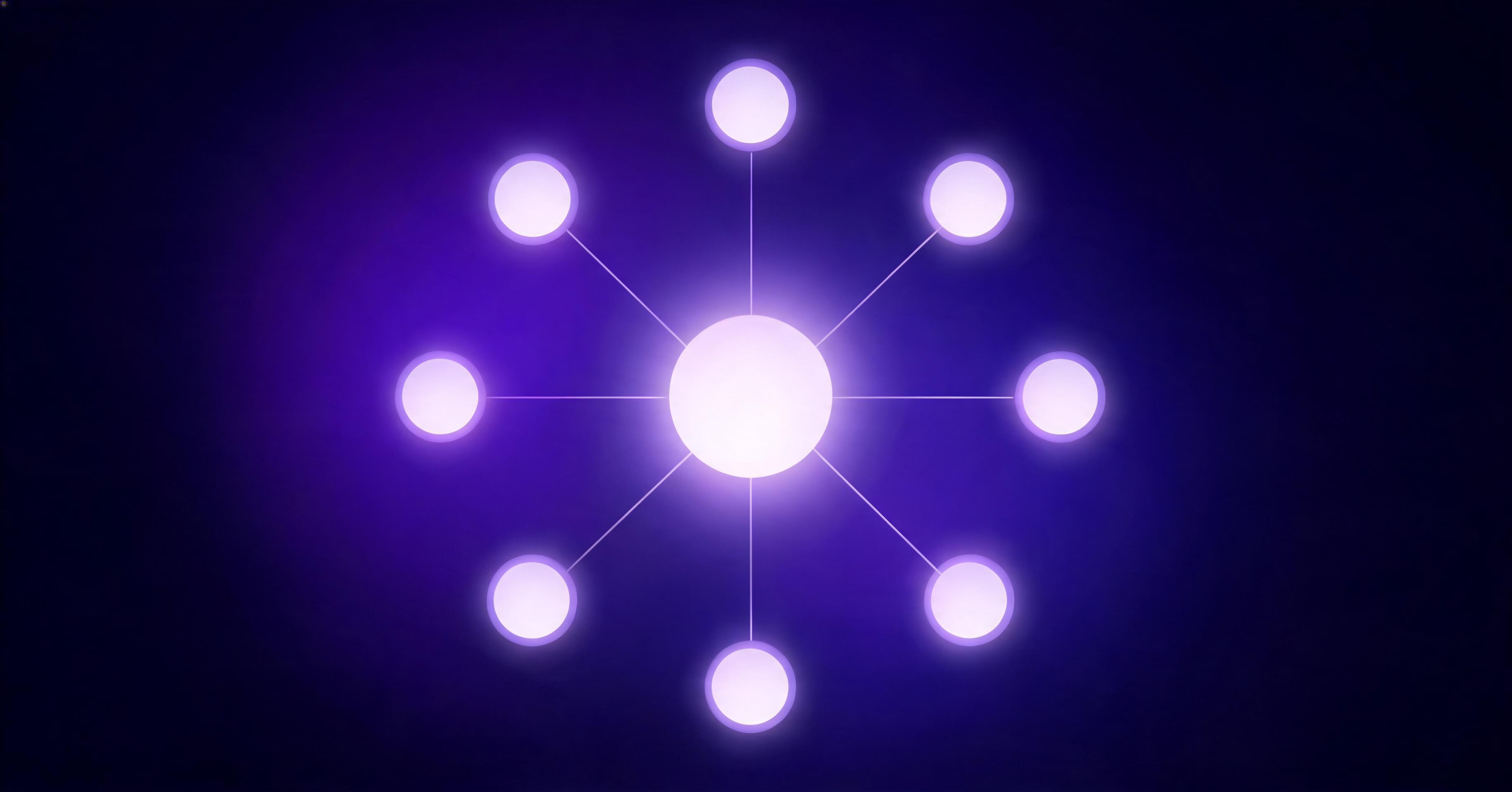
Inside Vibbi: How Custyle's Design Lead Orchestrates 8 Specialists
TL;DR: Vibbi is the AI Design Lead of the Custyle Crew — the first of nine AI agents, and the only one that never touches the artwork. Vibbi reads a request, breaks it into steps, picks the right specialist for each, and keeps track of context across the whole turn. Eight specialists do the building. Vibbi makes them act like one team instead of nine tools.
Table of Contents
- What Vibbi Does
- Meet the Design Lead
- Orchestration, Explained Plainly
- The 8 Specialists Vibbi Steers
- Why "The Second One" Is Never a Guess
- Why a Crew Beats One Big Model
- What This Means for the Person Making Merch
- FAQ
What Vibbi Does
Vibbi is the AI Design Lead of the Custyle Crew. Think of Vibbi as the captain of the team — the agent that hears what you want, plans the path, and sends each piece of work to the specialist who handles it best.
Here is the part that surprises people: Vibbi does not draw anything. Vibbi does not pick your colors, render a mockup, or place art on a hoodie. Vibbi decides what needs to happen, in what order, by whom — and then keeps the whole thing on track. That job has a name in AI engineering. It is called orchestration, and it is the reason the Custyle Crew behaves like one creative team instead of nine disconnected tools.
The Custyle Lab built Vibbi to solve a problem that hides inside almost every request. A sentence that sounds simple — "make me three retro cat shirts for summer, add the good one to my cart" — is not one task. It is four tasks, in four different parts of the system, with dependencies between them. Vibbi is the agent that pulls that apart, runs each piece, and remembers what "the good one" refers to by the end.
In one line: Vibbi turns a messy idea into a creative path that feels clear, fun, and worth following.
Meet the Design Lead
Every member of the Custyle Crew has a role, a voice, and a place in the pipeline. Vibbi sits at position one. On the Custyle site, Vibbi shows up as a floating orb — a guide that stays with you as you move from a blank prompt to a finished product.
The voice fits the job. Vibbi sounds confident but never arrogant, the kind of reliable captain who opens with "Let's." When you hover over Vibbi on the site, the line reads: "Okay, this one has a point of view." That is the whole personality in five words — a lead who takes your idea seriously and already sees where it could go.
The framing the Lab uses for the entire Crew says it best: "Not one AI. A whole crew built to get your merch right." Vibbi is the agent that makes "a whole crew" feel true. Without a lead, nine agents are just nine tools you would have to operate yourself. With Vibbi, they become a team that hands work down a line and arrives at a finished design.
Orchestration, Explained Plainly
Orchestration is the work of deciding and dispatching, not building. A useful way to picture it: Vibbi is the head chef calling the pass, not the cook on the grill. The cooks are excellent. Someone still has to read the ticket, fire the courses in order, and make sure the plate comes together.
Every time you send a message, Vibbi runs a short control loop before any creative work begins:
- Check the request for safety and limits.
- Load the memory — your current design, past results, research, cart, and the conversation so far.
- Read the intent — what you are actually asking for, and how many separate jobs are inside it.
- Resolve the references — figure out exactly what "the second one" or "the blue version" points to.
- Build a plan — a single step for simple requests, or a multi-step sequence for layered ones.
- Check the risk — a render is low-stakes; a checkout is not.
- Dispatch to the specialists and stream one clean result back to you.
Here is what makes Vibbi a lead rather than a worker. Vibbi decides which specialists a request involves, whether you need to clarify something first, whether a risky action needs your explicit yes, and how to pass each result to the next step. Some of those steps are invisible — you see a finished design, not the eight handoffs behind it.
And here is what Vibbi deliberately does not do: generate images, match products, search the catalog, write the chat reply, or process a payment. Those belong to the specialists. A good lead dispatches. It does not try to do every job itself — that is exactly how teams fall apart.
The 8 Specialists Vibbi Steers
The Custyle Crew is nine agents. Vibbi is the lead. The other eight are the specialists who actually build your merch — each one good at a single, narrow part of the journey. Here is the full crew Vibbi orchestrates:
| # | Crew Member | Role | What they own |
|---|---|---|---|
| 1 | Vibbi | Design Lead | Reads the request, plans the steps, keeps context. Dispatches — never builds. |
| 2 | Pia | Preference Reader | Picks up your taste, references, and unspoken leanings — fast. |
| 3 | Nova | Concept Shaper | Turns a loose prompt into a sharper creative direction. |
| 4 | Ink | Artwork Maker | Builds the visual language and the details that make a design feel real. |
| 5 | Bolt | Production Brain | Picks the right process, material, and technique to build it well. |
| 6 | Grid | Layout Specialist | Gets composition, spacing, and placement sitting right on the product. |
| 7 | Axis | Product Architect | Finds the right product form for your idea, with options. |
| 8 | Moxy | Try-On Director | Shows how the design lands on a real person. |
| 9 | Lumi | Scene Stylist | Builds the mood, context, and atmosphere around the finished piece. |
On a standard creation, Vibbi steers the work down a clear line:
Your idea
  → Vibbi reads it and plans the path
    → Pia reads your taste
      → Nova sharpens the concept
        → Ink makes the artwork
          → Bolt decides how to build it
            → Grid sets the layout
              → Axis picks the product form
                → Moxy shows the try-on
                  → Lumi styles the scene
                    → Your finished merch
Notice that Vibbi appears once, at the top. The Design Lead does not re-do each specialist's work. It sets the order, watches the handoffs, and steps back in only when the plan needs to change — a new request, a clarification, or a branch in the path.
Vibbi's reach also grew. In Custyle's newer architecture, the Crew works across five domains — Create, Shop, Inspire, Transact, and Converse — not just the design pipeline. Vibbi evolved from "routes one pipeline" to "orchestrates across all five." So when your sentence mixes a trend search, a design, and a cart action, Vibbi is the agent that spans all three without dropping the thread.
Why "The Second One" Is Never a Guess
One small detail separates a real orchestrator from a chatbot that fakes it: reference tracking. When Vibbi hands you results, each one becomes a named item with a position number. So when you say "use the second one," Vibbi knows precisely which thing you mean — design variant two, product candidate two, or trend direction two — based on what was just on screen.
This holds across every domain. "The second one" after a set of designs means variant two. After a shop search, it means product two. After a trend search, it means direction two. The system does not pick the most recent list and hope. If a reference is genuinely ambiguous, Vibbi asks instead of guessing.
That discipline is why a layered request works at all. "Search 2026 anime trends, pick the best summer direction, make three shirts, and add the second to my cart if it looks good" only holds together because one agent is tracking what every phrase points to from the first word to the last. Vibbi is that agent.
It extends to the parts that have to be exactly right. Prices, stock, and order status never come from a guess — Vibbi pulls those from real data, not from a language model's imagination. And a high-stakes action like checkout never fires from one fuzzy sentence. The Design Lead asks you to confirm first. Every run is also replayable: what happened, which specialist ran, what it received, and what it cost are all on the record.
Why a Crew Beats One Big Model
It is fair to ask: why nine agents? Why not one large model that does everything? The honest answer is that the industry has tested both, and the results point clearly toward an orchestrated team — when there is a real lead running it.
The market already moved. By 2026, 57% of organizations run multi-step agent workflows in production, up from a year of pilots. Specialized agents are why. A research agent with the right tools and a focused prompt outperforms a generalist by 23–31% on quality benchmarks. In one Microsoft study, a coordinated network of more than 100 smaller, specialized models beat a single large frontier model on industry tests. And on complex planning tasks, one Cornell-backed benchmark found multi-agent systems hit a 42.68% success rate versus 2.92% for a single agent working alone.
But here is the part most "AI crew" pitches skip — and the part that explains why Vibbi exists. A crew is not automatically better. Princeton researchers found a single agent matched or beat a multi-agent setup on 64% of tasks when it had the same tools. On purely step-by-step work, badly coordinated agents degraded results by as much as 70%. The split is simple: a crew wins on complex, parallel, specialized work, and loses when agents are bolted together with no one steering.
That is the whole case for a Design Lead. The advantage of nine specialists only shows up if something decides when to run them in parallel, when to go in order, when to ask you a question, and how to carry context between them. Orchestration is the difference between "nine models" and "one crew that is genuinely better than one model." Vibbi is that difference, made into a character.
What This Means for the Person Making Merch
You do not see any of this. You type "make me a cool shirt for my dog," and a finished, ready-to-buy design comes back. The orchestration, the handoffs, the reference tracking — all of it stays under the hood. That is the point. A good lead makes the work feel like one smooth result, not a relay race you have to manage.
What you feel instead is that the system gets it. Your taste shows up because Pia read it. The art looks intentional because Ink made it and Grid placed it. It is built on the right product, the right way, because Axis and Bolt decided so. And it all arrived in order, on topic, without you repeating yourself — because Vibbi kept the whole thing pointed at your idea.
That last rule matters most to the Custyle Lab. The Crew is never more impressed with the AI than with what you made. Vibbi's only job is to get your idea built right. Nine agents, one lead, one finished thing that looks like you meant it.
FAQ
Who is Vibbi in the Custyle Crew? Vibbi is the AI Design Lead — the first of nine agents in the Custyle Crew and the captain that orchestrates the rest. Vibbi reads your request, plans the steps, picks the right specialist for each, and keeps track of context, but never builds the artwork itself.
How many AI agents does Custyle use? Nine. Vibbi leads, and eight specialists — Pia, Nova, Ink, Bolt, Grid, Axis, Moxy, and Lumi — each handle one part of turning an idea into finished merch, from reading your taste to styling the final scene.
What does AI orchestration actually mean? Orchestration is deciding and dispatching, not building. Vibbi breaks a request into steps, sends each to the right specialist, passes results between them, and tracks what every reference means — so nine agents act like one team.
Is a multi-agent crew really better than one AI model? For complex, specialized work, yes. Benchmarks show specialized agents outperform generalists by 23–31%, and multi-agent systems far outperform single agents on complex planning. The catch is coordination — a crew only wins when a lead like Vibbi steers it.
Does Vibbi make the images? No. Ink makes the artwork and Grid handles placement. Vibbi's job is to plan the path and keep the crew in sync. The Design Lead dispatches the work; it does not draw.
Ready to make something?
Turn your ideas into real merch with AI. No design skills needed.
Start with a vibeCustyle Lab
Research & Guides · Jun 27, 2026·11 min read
Further Reading
Explore all →
Inside Moxy & Lumi: How Custyle Stages Your Product Before You See It
Moxy and Lumi are the presentation layer of the Custyle Crew — Moxy shows how your merch lands on a real person; Lumi builds the mood, context, and atmosphere around what you made.
Read more →
Creator Merch Case Study: How to Build a Merch Line in One Afternoon
A creator merch case study you can copy: real benchmarks (0.5–2% conversion, $68 AOV), an hour-by-hour afternoon build, and a fill-in template for your first drop.
Read more →
Inside Axis & Grid: Custyle's Form-and-Composition Crew
Axis and Grid are the structure layer of the Custyle Crew — Grid gets composition, spacing, and placement right; Axis finds the right product form your idea should live on.
Read more →
Inside Bolt: The Production Brain That Picks Materials Without Asking
Bolt is the AI production brain of the Custyle Crew — the agent that picks the process, material, and build quality for every design. Here is how.
Read more →