What Is Intent-Driven Manufacturing? Custyle's Production Philosophy Explained

Custyle Lab
Research & Guides · Aug 11, 2026·13 min read
What Is Intent-Driven Manufacturing? Custyle's Production Philosophy Explained
TL;DR: Intent-driven manufacturing is production that starts from a person's expressed intent — an idea, a vibe, a need said in plain words — instead of a factory's forecast or a shelf of pre-designed products. AI turns the intent into a design, the design into a spec, and the spec into one real thing. Nothing exists until someone means it to. This is Custyle's production philosophy, and this guide defines it properly.
Every product you've ever bought existed before you wanted it.
Someone forecast demand. Someone designed for an average customer. Someone printed ten thousand units and hoped. You arrived at the end of that chain and picked the closest match to what you actually meant.
Intent-driven manufacturing flips the chain. You express what you mean first. The product gets made because of it — designed for it, built for it, shipped for it. One piece, one person, one intent.
This article defines the term, traces where it came from, shows the data behind why it's happening now, and explains how Custyle puts it into practice.
Table of Contents
- Intent-Driven Manufacturing, Defined
- Three Eras: Forecast, Demand, Intent
- How Intent-Driven Manufacturing Works
- Why Now: The Numbers
- The Enterprise Version of the Same Idea
- What Changes for You
- The Honest Limits
- How Custyle Builds This Way
- FAQ
Intent-Driven Manufacturing, Defined
Here is the definition, stated plainly:
Intent-driven manufacturing is a production model where a person's expressed intent — described in natural language, images, or references — is translated by AI into a finished design and a manufacturable product, made one at a time, after the intent exists. The product is a response to meaning, not a guess at demand.
Three words in that definition carry the weight.
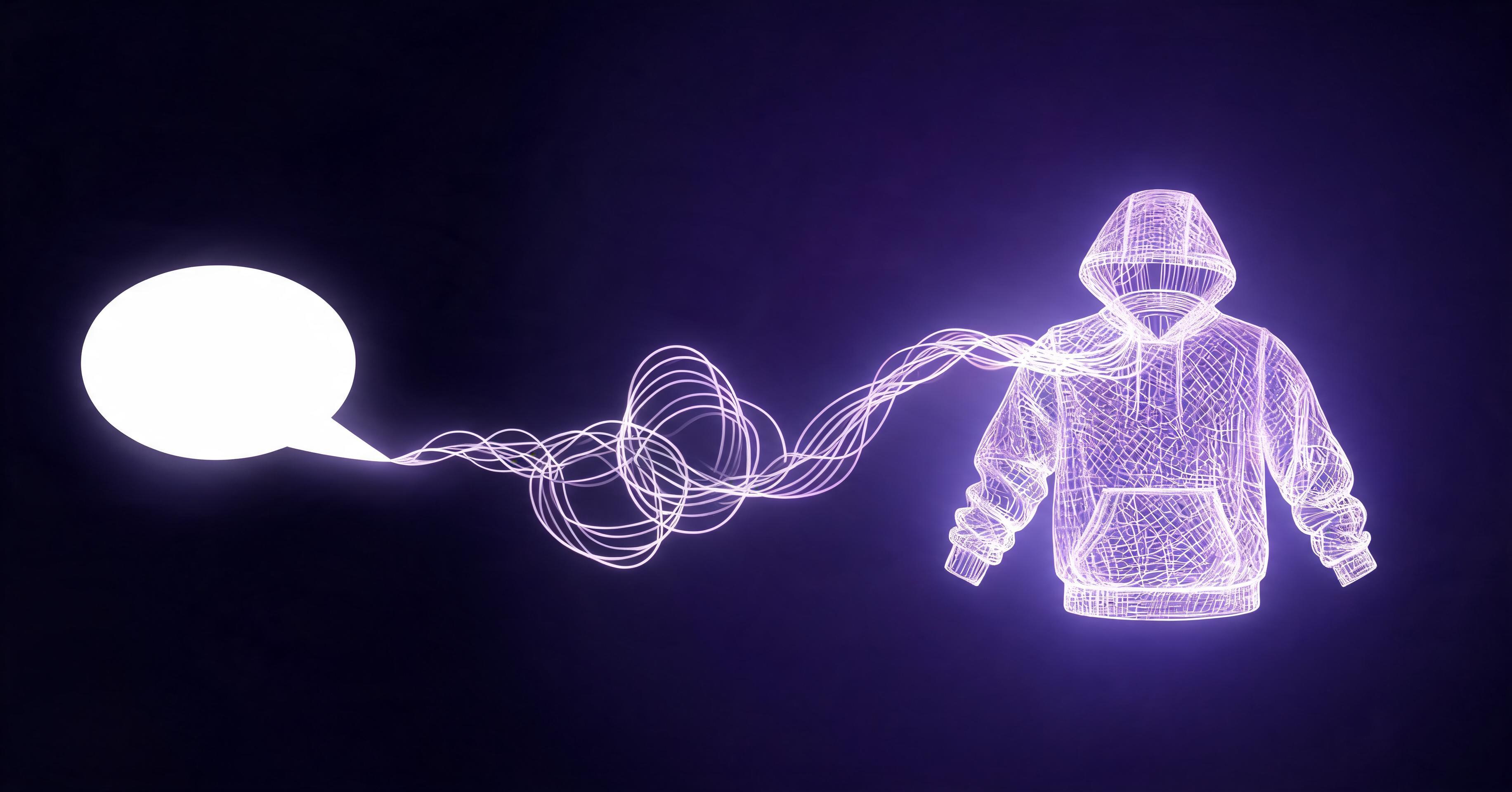
Intent is not an order. An order points at a product that already exists: SKU 4471, size M, black. An intent describes an outcome that doesn't exist yet: "a hoodie that feels like my band's new album." The order selects. The intent creates.
Translated is where the AI lives. Someone has to turn "feels like my album" into artwork, type, layout, garment, color, and print spec. That used to require a designer, a production manager, and weeks. Now an AI crew does it in minutes.
After is the economics. Nothing is produced until the intent is expressed and confirmed. No forecast, no inventory, no deadstock. A product that nobody meant is a product that never gets made.
If you want the one-line version: forecast-driven manufacturing guesses, demand-driven manufacturing waits, intent-driven manufacturing listens.
Three Eras: Forecast, Demand, Intent
Intent-driven manufacturing didn't appear from nowhere. It's the third step in a progression the industry has been walking for decades.
Era one: forecast-driven
Mass production works by predicting. A brand guesses what people will want months ahead, produces to stock, and sells down the pile. When the guess is wrong — and in fashion it's wrong constantly — the result is markdowns, landfill, and warehouses of things nobody meant.
The model isn't stupid. It's how a t-shirt costs less than a sandwich. But it can only serve the middle of the demand curve. It manufactures averages.
Era two: demand-driven
Print on demand and made-to-order production broke the forecast. Nothing gets made until an actual order lands. Batch size: one. Inventory risk: zero.
This era is no longer fringe. The global print-on-demand market sits at an estimated $13–15 billion in 2026, with research firms reporting growth rates between 23.6% and 25% a year, according to Grand View Research and Straits Research. Straits projects the market reaching $84.69 billion by 2034. The wider digital manufacturing market is valued near $699 billion in 2026, and on-demand production makes up over half of it, per Business Research Insights.
Machine-tool maker DMG MORI calls this "batch size of 1." PwC calls the broader shift toward one-off production — what the industry labels mass customization — a business imperative rather than a niche.
But era two has a ceiling. Demand-driven production still needs a finished design before anything happens. Someone still has to open design software, make the artwork, and set up the product. Printing became on-demand. Design didn't.
Era three: intent-driven
Intent-driven manufacturing makes design itself on-demand. The trigger isn't an order for a pre-designed SKU. The trigger is raw intent — words, a photo, a mood — and AI carries it the rest of the way: creative direction, artwork, product match, production spec.
The product doesn't exist before the intent. Not the inventory. Not even the design.
That's the line between era two and era three, and it's the line this term exists to name.
How Intent-Driven Manufacturing Works
The model has three stages. Each one replaces something that used to be a human bottleneck.
Stage one: capture the intent
You say what you mean, however you can say it. A sentence. A reference image. A screenshot and the word "this, but for my dog." The system's first job is to read it — and to ask the right follow-up when the intent is fuzzy. Style, audience, occasion, budget.
This is the stage that makes the model different from a design tool. A tool waits for instructions. An intent-driven system extracts meaning and fills the gaps with judgment.
Stage two: translate intent into a product
The captured intent becomes a creative direction, then artwork, then a real product spec. That means decisions a designer and a production manager used to make: composition, color that survives printing, the right garment, the right technique for that artwork on that material.
In intent-driven manufacturing, the design brief, the designer, and the production plan collapse into one automated pass from meaning to manufacturable file.
Every step here is a judgment call, which is why it takes an AI crew rather than a single image generator. A pretty picture is not a product. Artwork that ignores fabric, print method, and placement produces merch that disappoints in the real world.
Stage three: produce after confirmation
You see the real product — mocked up, priced, honest — before anything is made. You approve it. Then exactly one gets built and shipped.
The approval step matters more than it looks. Intent-driven does not mean autonomous-to-the-point-of-reckless. The AI acts within guardrails, and the human holds the checkpoints that count: the design, and the purchase. Enterprise AI vendors have landed on the same principle — define where AI recommends, where it acts within limits, and where human approval is always required.
Why Now: The Numbers
Three curves crossed to make intent-driven manufacturing possible in 2026. Each is measurable.
The production layer is built. On-demand manufacturing infrastructure — the era-two achievement — is mature and growing at compounding rates. Print-on-demand at $13–15 billion growing ~24% yearly. Additive manufacturing at $37.6 billion in 2026, headed to a projected $168.9 billion by 2033, per Grand View Research. Single-piece production is no longer the hard part.
The demand side went agentic. People increasingly shop by stating intent to an AI rather than browsing shelves. According to industry tracking at commercetools and MetaRouter, 73% of consumers already use AI somewhere in their shopping journey, and AI platforms drive an estimated $20.57 billion in 2026 U.S. retail e-commerce sales. Shopify reported AI-driven store traffic up 8x year-over-year in early 2026, with orders from AI-originated searches up nearly 13x. J.P. Morgan estimates agentic commerce could reach a quarter of U.S. online sales by 2030; McKinsey & Company projects $3–5 trillion globally by then. Commerce is learning to receive intent. Manufacturing has to learn to fulfill it.
People pay for meaning. Deloitte research found one in five consumers is very willing to pay more for a product they had a hand in shaping, and that 80% prefer brands that shape experiences around them — spending about 50% more with those brands. Separate industry surveys put the share of consumers willing to pay extra for clothing made to their taste above 81%.
Put the three together:
By 2026, single-piece production is cheap, a majority of shoppers express intent to AI, and buyers pay more for products that carry their meaning. Intent-driven manufacturing is what those three facts add up to.
The Enterprise Version of the Same Idea
The phrase "intent-driven" is also emerging inside industrial software, and it's worth knowing the lineage — partly because it validates the direction, partly because it's a different thing.
Chris Lloyd, Chief Solutions and Technology Officer at ERP vendor Syspro, predicts that factory software is shifting from systems that record transactions to "intent-driven, agent-assisted enterprise systems." A plant manager says "minimize late orders this week," and the system interprets the goal and orchestrates the tasks. Lloyd calls it the shift "from ERP as a system of record, to a system of insights and, ultimately, to a system of action."
Academic work points the same way. A 2026 arXiv paper on intent-driven smart manufacturing pairs knowledge graphs with large language models so operators can state high-level goals in natural language and have them translated into executable factory instructions.
Here's the distinction that matters:
| Enterprise intent-driven | Consumer intent-driven | |
|---|---|---|
| Whose intent | The operator's ("reduce late orders") | Yours ("merch for my podcast launch") |
| What gets made | Decisions about existing production | A product that didn't exist |
| AI's job | Interpret goals, orchestrate operations | Interpret meaning, create the design |
| Output | Actions inside a factory | A physical thing at your door |
Both share the core move: natural language in, guardrailed autonomous action out. The enterprise version makes factories understand their managers. The consumer version — Custyle's version — makes production understand you.
What Changes for You
Definitions are nice. Consequences are the point. Intent-driven manufacturing changes three things for anyone who makes, sells, or wants things.
Zero-inventory creation. Whether you're a creator dropping merch or a person who wants one hoodie, nothing is produced on spec. No minimum runs, no boxes in a garage, no capital sunk into a guess. An idea that flops costs you the minutes you spent on it.
Design of one, not just batch of one. Era two gave the world batch size of one — DMG MORI's phrase. Intent-driven manufacturing adds design of one. The artwork itself is born from your intent, not picked from a template wall. Two people with the same product category end up with genuinely different objects, because they meant different things.
Speed that matches culture. When design collapses into the same pass as production, the idea-to-object gap drops from weeks to minutes. That changes what's worth making. A moment, a joke, a memory from last weekend — things too small and too fast for the old chain become makeable.
→ Related: how AI turns ideas into custom products
The Honest Limits
A definition you can trust has to include what the model can't do yet.
Generic AI isn't enough. Intent translation fails without domain grounding — garment physics, print behavior, color under real light. Syspro's Lloyd makes the same point about factories: success rests on "trust, data quality and context, not only on algorithms." An image model with no production knowledge makes screen-pretty designs that fail on fabric.
The trust gap is real. Consumers are comfortable with AI assistance but still early on AI purchasing — about 70% say they're at least somewhat open to an agent buying for them, yet only 13% have completed an AI-referred purchase. Human checkpoints aren't a temporary crutch; they're part of the model's design.
Mass production isn't dying. Commodity goods — plain socks, blank notebooks — will stay forecast-driven, because averages are what they are. Industry analysis through 2026 lands on hybridization, not replacement. Intent-driven manufacturing wins the long tail of personal meaning, not the commodity middle.
One-off quality is the hard problem. Consistency across single pieces — color matching, placement, finish — is exactly the kind of production judgment that separates a real intent-driven system from a prompt taped to a printer.
How Custyle Builds This Way
Custyle.ai is an AI Merch Agent — a system built end-to-end on the intent-driven model. Here's how the three stages map to something concrete.
You start with anything: a sentence, an image, a mood. The Crew — Custyle's nine AI specialists — takes it from there. Vibbi reads the intent and sets creative direction. Ink and the artwork agents make designs shaped for real products, not just screens. Axis and Grid handle form and composition. The production side picks the right technique and material for that design, so what arrives matches what you approved.
You see it before it's real. You approve it. One gets made.
No design skills. No minimums. Nothing produced that nobody meant.
That last sentence is the philosophy in miniature. Custyle doesn't manufacture products and search for buyers. It receives intent and answers with objects. That's why "intent-driven manufacturing" is the right name for how this works — and why we think it names where the whole category is going.
→ Related: what an AI merch agent is
The Short Version
Intent-driven manufacturing is production that listens first. Forecast-driven factories guessed. Demand-driven printing waited for orders against existing designs. Intent-driven manufacturing takes what you mean — said in your own words — and makes the design, the spec, and the object in response, one at a time, with you approving what counts.
The infrastructure is here. The shopping behavior is here. The willingness to pay for meaning is here. The era where products start with a person, not a forecast, has already begun.
Turn any vibe into something real. That's not a slogan about speed. It's a manufacturing philosophy — this one.
FAQ
What is intent-driven manufacturing in one sentence?
Intent-driven manufacturing is a production model where AI translates a person's expressed intent — words, images, or references — into a finished design and a physical product, made one at a time, only after the intent exists. The product responds to meaning instead of guessing at demand.
How is intent-driven manufacturing different from on-demand manufacturing?
On-demand manufacturing waits for an order against a design that already exists; someone still had to create that design first. Intent-driven manufacturing makes the design itself on demand. The trigger is raw intent rather than a SKU selection, so design and production both happen after you express what you want.
Is intent-driven manufacturing the same as mass customization?
No. Mass customization, the industry's earlier term, lets you adjust a pre-designed product — pick a color, add a name. Intent-driven manufacturing starts before the design exists. The AI creates original artwork and product decisions from your intent, so the outcome is a design of one, not a variant of one.
Does intent-driven manufacturing mean AI buys and makes things without me?
No. The model keeps human checkpoints where they matter: you approve the design and you approve the purchase. The AI works within guardrails — it creates, recommends, and prepares production, but nothing physical gets made until you confirm it's what you meant.
Why is intent-driven manufacturing emerging now?
Three measurable curves crossed. Single-piece production infrastructure matured — print-on-demand is a $13–15 billion market growing ~24% yearly. Shopping went agentic — 73% of consumers use AI in their purchase journey. And buyers pay more for meaning — over 81% will pay extra for clothing made to their taste.
Custyle.ai is the AI Merch Agent for self-expression. Describe a vibe — a memory, a meme, an aesthetic — and a crew of nine AI specialists turns it into real merch. No design skills. No minimums.
Ready to make something?
Turn your ideas into real merch with AI. No design skills needed.
Start with a vibeCustyle Lab
Research & Guides · Aug 11, 2026·13 min read
Further Reading
Explore all →
Inside Moxy & Lumi: How Custyle Stages Your Product Before You See It
Moxy and Lumi are the presentation layer of the Custyle Crew — Moxy shows how your merch lands on a real person; Lumi builds the mood, context, and atmosphere around what you made.
Read more →
Creator Merch Case Study: How to Build a Merch Line in One Afternoon
A creator merch case study you can copy: real benchmarks (0.5–2% conversion, $68 AOV), an hour-by-hour afternoon build, and a fill-in template for your first drop.
Read more →
Inside Axis & Grid: Custyle's Form-and-Composition Crew
Axis and Grid are the structure layer of the Custyle Crew — Grid gets composition, spacing, and placement right; Axis finds the right product form your idea should live on.
Read more →
Inside Bolt: The Production Brain That Picks Materials Without Asking
Bolt is the AI production brain of the Custyle Crew — the agent that picks the process, material, and build quality for every design. Here is how.
Read more →