Inside Bolt: The Production Brain That Picks Materials Without Asking

Custyle Lab
Research & Guides · Aug 28, 2026·10 min read
Inside Bolt: The Production Brain That Picks Materials Without Asking
TL;DR: Bolt is the AI production brain of the Custyle Crew — the sixth agent in Custyle's nine-member creation pipeline. Bolt decides how every design gets built: the technique, the fabric, the quality constraints. You never see those decisions, and that is the point. You describe a vibe; Bolt handles the build. In Custyle's V2 architecture, Bolt is one of only two Crew members working inside the Transact domain as well as Create.
Table of Contents
- What Bolt Does
- Where Bolt Sits in the Custyle Crew
- What Goes Wrong Without a Production Brain
- The Decision Bolt Runs on Every Design
- Why Material Choice Is Harder Than It Looks
- Without Asking Does Not Mean Without a Record
- Bolt in the V2 Architecture
- FAQ
What Bolt Does
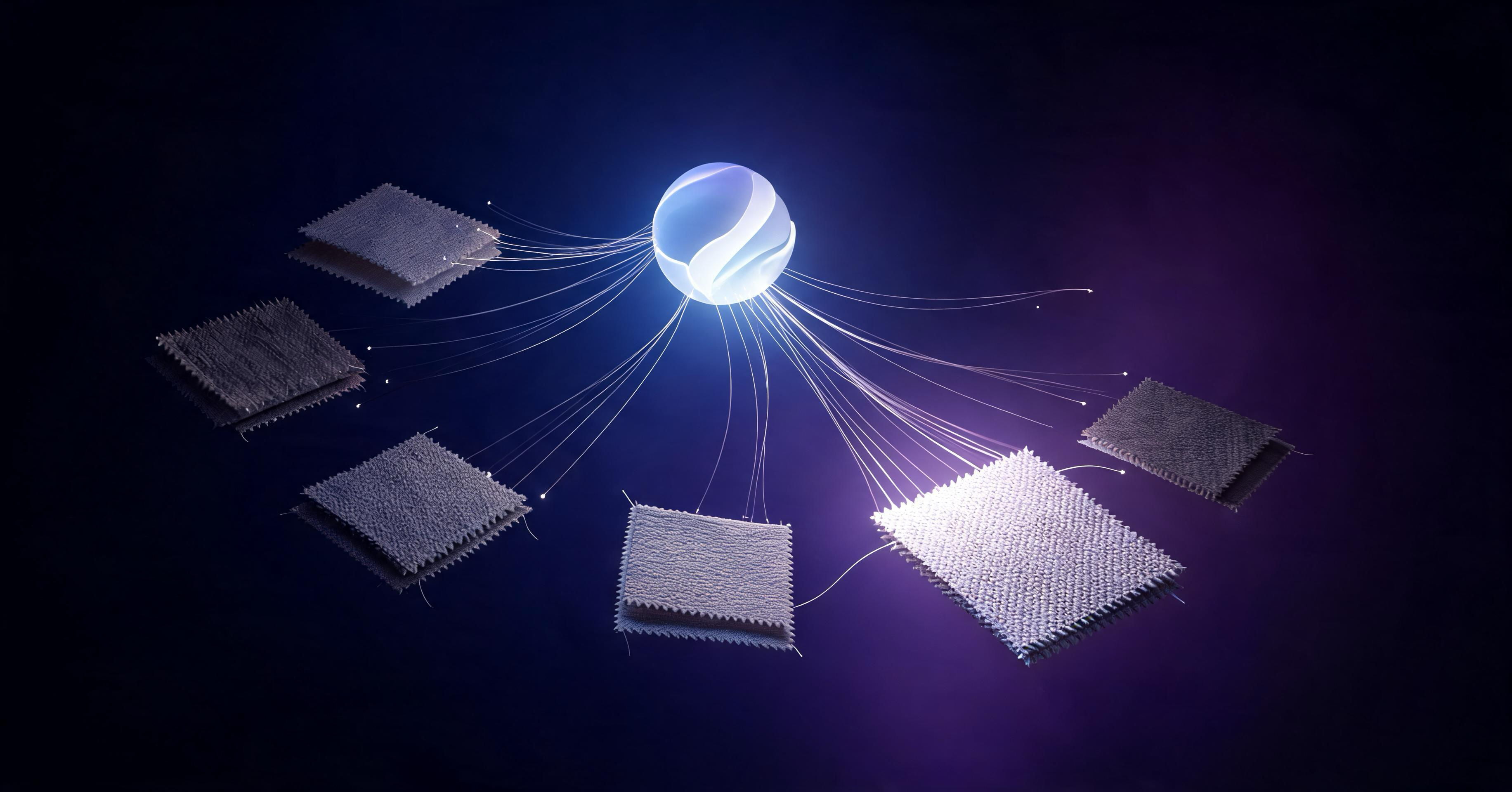
Bolt is the production brain of the Custyle Crew. The job: figure out how to build your design — the right process, the right material, the right quality. Hover over Bolt's card on Custyle.ai and you get the whole philosophy in six words: "Best process. Best material. Built right."
Here is what that means in practice. Every custom product hides a stack of manufacturing decisions. Which technique puts this artwork on this fabric. Which fabric weight matches the product's promise. Whether the design's colors survive on a dark base. Whether fine detail holds at print size. Get any of these wrong and a great design ships as a bad product.
Most platforms hand those decisions to you as dropdown menus. Custyle hands them to Bolt. You never pick an ink chemistry. You never get quizzed about fabric weight. The Custyle Lab built Bolt on a simple bet: the user should be asked about intent, never about manufacturing.
Bolt runs at step eight of Custyle's twenty-step creation workflow — the product match step. That is where the design meets the physical world: fabric, weight, fit, and color matching, all resolved in one pass.
Where Bolt Sits in the Custyle Crew
The Custyle Crew is the nine AI agents behind every product interaction on Custyle.ai. Each one owns a slice of the journey from idea to delivered product. Bolt sits at position six.
| # | Crew Member | Role | V2 Domains |
|---|---|---|---|
| 1 | Vibbi | Domain Orchestrator | All (orchestration layer) |
| 2 | Pia | Preference Reader | Create, Shop, Converse |
| 3 | Nova | Concept Shaper | Create, Inspire |
| 4 | Axis | Product Architect | Create, Shop |
| 5 | Ink | Artwork Maker | Create |
| 6 | Bolt | Production Brain | Create, Transact |
| 7 | Grid | Layout Specialist | Create |
| 8 | Moxy | Try-On Director | Create |
| 9 | Lumi | Scene Stylist | Create |
The order matters. By the time work reaches Bolt, Pia has read your taste, Nova has shaped the concept, and Ink has made the artwork. Bolt's input is a finished design with a clear intent behind it. Bolt's output is a build decision — which then constrains everything downstream. Grid places the artwork inside real print-area limits. Axis locks the product form. Moxy renders the preview on the product Bolt actually chose, not a generic blank.
That position is deliberate. Production decisions made too early would box in the creative work. Made too late, they would force redesigns. Bolt sits exactly where creativity hands off to construction.
What Goes Wrong Without a Production Brain
Skip this decision layer and the failure shows up in your closet, not in the app.
Industry teardowns of custom apparel failures point at the same culprits again and again. According to PODpartner's wash-test analysis, a print that cracks or peels within one to five washes — with proper care — is almost always a production problem, not a care problem. Under-cured ink never bonds with the fabric. Over-cured ink turns brittle and fractures under stress. Rigid ink formulations crack the moment the fabric stretches.
Method-to-fabric mismatches are just as common. Direct-to-garment printing produces soft, detailed results on cotton but fails on polyester — the ink absorbs poorly and the dye migrates, as Printful's process guide notes. Dye sublimation bonds at the fiber level and physically cannot crack or peel — but only works on light-colored, polyester-heavy fabric. Transfer prints flex well on stretch fabrics, yet their edges can lift against zippers and rough seams if placement ignores the garment's construction.
None of these failures come from bad designs. They come from good designs built the wrong way. That is the entire reason Bolt exists as a dedicated agent rather than a settings page: the decision is real, it is consequential, and most people making merch for the first time do not know it needs to be made.
The Decision Bolt Runs on Every Design
Bolt's decision is a three-way match: process × material × design. Every technique has a zone where it wins and a zone where it quietly ruins the product.
| Technique | Where it wins | Where it fails |
|---|---|---|
| Direct-to-garment (DTG) | Detailed, multi-color art on cotton; single pieces | Polyester; dark fabric without pre-treatment |
| Direct-to-film (DTF) | Cotton, poly, blends, denim, canvas; stretch fabric; small colorful runs | Edge placement near seams and zippers |
| Dye sublimation | Polyester-heavy, light-base fabric; prints that must never crack | Cotton; dark base colors |
| Screen printing | Big runs of simple, bold designs | Small runs — setup cost dominates |
The design itself steers the choice. Fine linework and photo-detail push toward digital printing. High ink coverage on dark fabric changes the pre-treatment math. Artwork stretched across a performance fabric needs a technique that flexes. A one-off gift and a fifty-piece team order can carry the same artwork and still deserve different builds — production guides for custom apparel put the screen-printing crossover in the hundreds of units, which is why single-piece custom work lives almost entirely in digital techniques.
Bolt evaluates that whole matrix per design, per order. Not once per catalog. Per design. That granularity is only possible because the decision-maker is software — no human production manager prices out a one-unit order.
Why Material Choice Is Harder Than It Looks
Process is only half of Bolt's call. The other half is the material itself — and material quality is famously easy to misjudge.
Fabric weight, measured in grams per square meter, decides more about how a garment feels than its color, cut, or logo. Retail-standard tees sit around 150–180 GSM; heavyweight streetwear tees run 200–240 GSM and up. Hoodies standard out at 280–350 GSM, and according to fabric weight guides, streetwear buyers now expect 400+ GSM before "heavyweight" feels honest.
But weight alone is a trap. A heavy tee cut from low-grade cotton feels rough and pills fast. A lighter tee in combed ring-spun cotton feels softer, prints cleaner, and outlasts it. Weight, fiber, spin, and weave interact — with each other and with the printing technique on top of them.
So the material question is never "which fabric is best." It is "which fabric is right for this design, this product, this build." That is a multi-variable judgment call, made per order. Asking you to make it would mean asking you to learn a trade. Bolt already knows the trade.
This is also where Bolt's character voice comes from. The Custyle Lab writes Bolt as a craftsperson, not a spec sheet — grounded, plain-spoken, the Crew member most likely to say "trust me." The confidence is the interface. The spreadsheet stays inside.
Without Asking Does Not Mean Without a Record
"Picks materials without asking" sounds like a black box. It is the opposite. Custyle's agent system draws a sharp line about what deserves a question.
Ambiguous intent always gets a question. Say "make the second one a hoodie" when two lists are on screen, and Vibbi, the orchestrator, asks which list you mean. High-stakes actions always get a confirmation — checkout never fires off one ambiguous sentence. Manufacturing choices get neither, because there is a correct answer and the system knows it. Asking would just export the platform's homework to you.
Behind that silence sits an audit trail. Every agent run at Custyle is replayable: what ran, which tools it used, what inputs it saw, what it decided. Bolt's build decisions are recorded the same way. If a product ever underperforms, the Lab can trace exactly which build call was made and why — and fix the decision logic for every future order, not just refund one shirt.
That trade — silent decisions, loud records — is the design pattern worth copying. It is also where the industry is heading. Apparel manufacturing research shows AI moving from pilot projects to production standard in 2026, with machine selection and material disposition increasingly handled without human intervention. The difference: most factory AI tunes a production line's economics. Bolt makes a bespoke build decision for a single item, for a single person. Same intelligence, pointed at your one hoodie instead of a million-unit line.
Bolt in the V2 Architecture
Custyle's V2 architecture reorganized the Crew around five capability domains — Create, Shop, Inspire, Transact, and Converse. Most Crew members live entirely inside Create. Bolt got a bigger remit: Create and Transact.
Inside Create, Bolt is the manufacturing intelligence described above — technique, material, and quality constraints for every new design.
Inside Transact, Bolt's knowledge grounds the commercial layer. Real products carry real constraints — what a build costs, what quality tier a product promises, what is physically producible. Custyle's transaction principle is strict: prices, stock, and order facts come from real data sources, never from generated text. Bolt is part of how production reality stays wired into that layer as checkout, fulfillment, and agent-to-agent commerce expand.
That dual role makes Bolt one of the load-bearing agents in Custyle's larger bet — that an AI Merch Agent should own the full path from "here's my vibe" to "it arrived, and it's built right." Design without production intelligence is wallpaper. Production without design intelligence is a blank catalog. Bolt is the hinge between the two.
Want the full roster? → Related: Meet the Custyle Crew — the nine AI agents behind every product. For the philosophy underneath Bolt's job, read → Related: What is intent-driven manufacturing.
FAQ
What is Bolt in Custyle?
Bolt is the production brain of the Custyle Crew, the nine AI agents behind Custyle.ai's AI Merch Agent. Bolt is the sixth agent in the creation pipeline and decides how each design gets built — selecting the technique, material, and quality constraints — so the finished product matches the design's intent without the user making any manufacturing choices.
How does Bolt pick the right production method?
Bolt runs a three-way match between process, material, and design. The artwork's detail level, color coverage, and stretch requirements are weighed against each technique's strengths — digital printing for detailed single pieces, fiber-level dye for polyester, transfers for blends and stretch fabric. Bolt makes this call per design and per order, not once per catalog.
Why doesn't Custyle let users choose materials themselves?
Because material choice is a trade skill, not a preference. Fabric weight, fiber grade, spin, and printing technique interact in ways that take years to learn. Custyle's design rule is that users get asked about intent — what they want to express — and never about manufacturing. Bolt absorbs the technical decision and the user just sees the result.
Why do custom shirts crack or peel after washing?
A print that cracks or peels within the first few washes almost always failed in production, not in your laundry. Common causes are under-cured ink that never bonded, over-cured ink that turned brittle, inflexible ink on stretch fabric, or a printing method mismatched to the fabric. A production decision layer like Bolt exists to prevent exactly these mismatches.
What does Bolt do in Custyle's V2 architecture?
In V2, Bolt operates in two of Custyle's five capability domains: Create and Transact. In Create, Bolt selects techniques, materials, and quality constraints for new designs. In Transact, Bolt's production knowledge grounds pricing and fulfillment in real manufacturing constraints, keeping the commercial layer tied to what can actually be built.
Ready to make something?
Turn your ideas into real merch with AI. No design skills needed.
Start with a vibeCustyle Lab
Research & Guides · Aug 28, 2026·10 min read
Further Reading
Explore all →
Inside Moxy & Lumi: How Custyle Stages Your Product Before You See It
Moxy and Lumi are the presentation layer of the Custyle Crew — Moxy shows how your merch lands on a real person; Lumi builds the mood, context, and atmosphere around what you made.
Read more →
Creator Merch Case Study: How to Build a Merch Line in One Afternoon
A creator merch case study you can copy: real benchmarks (0.5–2% conversion, $68 AOV), an hour-by-hour afternoon build, and a fill-in template for your first drop.
Read more →
Inside Axis & Grid: Custyle's Form-and-Composition Crew
Axis and Grid are the structure layer of the Custyle Crew — Grid gets composition, spacing, and placement right; Axis finds the right product form your idea should live on.
Read more →
Behind the Scenes: How One Custyle Product Goes from Prompt to Box
Type a prompt. Get a box. Follow one Custyle product through 14 AI steps, 9 specialists, and a single made-for-you piece — from taste-reading to tracked delivery.
Read more →