AI Merch Agent vs Midjourney for Merch: Why Image Gen Isn't Enough
Custyle Picks
Reviews & Comparisons · Aug 17, 2026·9 min read
AI Merch Agent vs Midjourney
TL;DR: Midjourney is the best artistic image generator you can point at a t-shirt idea. It is not a merch tool. You still handle upscaling, background removal, product matching, listings, and shipping yourself. An AI merch agent handles that whole chain from one conversation. Pick Midjourney if you're a designer building a catalog. Pick an agent if you want the finished thing.
Contents
- Two tools, two different jobs
- Where Midjourney genuinely wins
- The 80% Midjourney leaves on your desk
- The licensing fine print
- AI merch agent vs Midjourney: side by side
- What each route really costs
- Which one fits you
- FAQ
Searching "ai merch agent vs midjourney" usually means one thing. You have an idea, you want it on a real product, and you're deciding which tool gets you there. Here's the direct answer: they're not competitors. Midjourney generates images. An AI merch agent turns intent into a delivered product. One is a component. The other is the pipeline.
This comparison is for creators, small brands, and sellers — not professional designers with a Photoshop reflex. We'll be fair to Midjourney. It earns its reputation. But we'll also count every step it doesn't do.
Two tools, two different jobs
Midjourney is an AI image generator. Type a prompt, get artwork. In 2026 it's still rated the best tool for artistic quality in t-shirt design roundups like Merch Titans' 2026 comparison. Character consistency, an editor for inpainting and outpainting, photorealism that keeps improving. As art software, it's superb.
An AI merch agent is a different category. You describe what you want in plain language. The agent handles creative direction, design, product matching, print prep, and fulfillment. No design files. No listing mechanics. → Related: What is an AI Merch Agent?
Three things historically stopped creators from making merch: design skill, operational complexity, and inventory risk. Image generators solve the first. Agents are built to solve all three.
That's the whole comparison in miniature. The rest is detail — but the detail is where your weekends go.
Where Midjourney genuinely wins
Credit where it's due. Midjourney beats agents — and most humans — on a few axes:
Artistic ceiling. For illustration-heavy, style-driven artwork, nothing else consistently matches it. If your merch is the art, Midjourney's output quality is the product.
Creative control. Reference images, style tuning, remixing, an editor for fixing details. You can steer it like a design tool, because it is one.
Volume. Generations take about 60 seconds on fast mode. According to Merch Titans' print-on-demand guide, experienced users produce 40–80 designs a day on the $30 Standard plan. For catalog sellers testing hundreds of designs, that throughput matters.
Price per image. Roughly 900 generations for $30 a month. As raw image supply, it's cheap.
If you're a designer building a 500-design storefront, stop reading and go subscribe. That's your tool. Everyone else, keep going — because generating the image is where Midjourney's job ends and yours begins.
The 80% Midjourney leaves on your desk
Here's the workflow the guides recommend once your image exists. Count the tools.
1. Upscaling. Midjourney outputs roughly 1–2K pixels. Print platforms want 4500×5400 pixels at 300 DPI for a shirt. That gap is yours to close with Topaz Gigapixel, Upscayl, or Let's Enhance — a separate tool, sometimes a separate subscription.
2. Text fixes. Midjourney still garbles words. The standing advice: keep text to 1–3 words, then add real typography in Canva or Photoshop afterward. Slogan shirts, the best-selling merch format there is, need a second app.
3. Background removal. Products need transparent backgrounds. That means Adobe Express, remove.bg, or Photoshop. Manual, every time, and edges on fine details get noisy.
4. Product setup. Now pick a product, match your art to its print area, check color profiles, and build the listing. Manual product selection runs 5–15 minutes per item. Multiply by your catalog.
5. Fulfillment. Midjourney ships nothing. You still need a print platform, a storefront, and someone — you — wiring them together.
Per-design post-processing alone runs 2–3 minutes after generation, before any listing work. The image was the fun 20%. This list is the other 80%, and it's why "I made it in Midjourney" and "I sold it" are separated by a full evening.
An AI merch agent collapses that list into the conversation you already had. Design, product matching, print-ready files, fulfillment — handled. Product matching that takes 5–15 minutes manually takes an agent 1–3 minutes, and it remembers your taste for next time instead of starting from zero. That memory is the quiet difference: a tool starts over every session; an agent gets sharper the more you use it.
The licensing fine print
Two facts most tutorials skip.
You can sell Midjourney output — with conditions. Per the 2026 commercial-use analysis at Terms.law, any paid plan lets you sell your images on merch. Free-tier images are non-commercial only. And companies earning over $1 million a year must be on the $60 Pro or $120 Mega plan.
You may not own what you sell. US copyright registration requires meaningful human creative input. Purely AI-generated images don't qualify. Practically: a design you sell from a raw prompt can be copied by anyone, and you have limited recourse. Designers mitigate this by editing outputs substantially. That's more time in the 80%.
None of this is a scandal. It's just work and risk the "type a prompt, get rich" videos leave out.
AI merch agent vs Midjourney: side by side
| Midjourney | AI Merch Agent | |
|---|---|---|
| You provide | Engineered prompts, design judgment | A description of what you want |
| You get | An image file (~1–2K px) | A finished product, shipped |
| Print prep | You: upscale, cut background, fix text | Handled — designs made for merch |
| Product matching | Manual, 5–15 min per product | Automated, 1–3 min |
| Fulfillment | Not included | Included |
| Memory | None — every session starts over | Learns your taste across orders |
| Extra tools needed | Upscaler, editor, background remover, print platform | None |
| Monthly cost | $10–$120 + tool subscriptions | Typically pay per product |
| Best for | Designers building catalogs | People who want the actual merch |
What each route really costs
The Midjourney route: $30/month Standard, plus an upscaler (Topaz is a one-time ~$99, others subscribe), plus Canva or Photoshop for text, plus your time. Call it 20–40 minutes per finished, listed product once you're practiced. Cheap in cash, expensive in evenings.
The agent route prices per product, like ordering anything else. You pay when something real ships. No subscription stack, no tool-chain, no time cost beyond describing what you want.
The market has noticed which direction this flows. Print-on-demand is growing from about $15 billion in 2026 toward $46 billion by 2031, per Mordor Intelligence — a 25% annual clip. The AI custom merchandise segment inside it already sits at $8–12 billion. And when Amazon added prompt-to-merch through Alexa in June 2026, the signal was hard to miss: the product is the destination now, not the image. Design time drops 70–85% with AI in the loop. The winners are the tools that carry the idea all the way to the doorstep.
Which one fits you
Choose honestly by what you actually want at the end.
Choose Midjourney if: you're a designer or a volume seller. You want maximum artistic control, you're building a catalog of hundreds of designs, and you already own the supporting tool-chain. The 80% is your craft, and you're good at it.
Choose an AI merch agent if: you want the thing, not the workflow. A hoodie for the group chat. A drop for your audience. Team merch without a design agency. You describe the vibe once; design, the right product, and delivery are someone else's job — the agent's.
Use both if: you love directing art but hate production. Generate in Midjourney, then hand the concept to an agent to make it real. Nothing about the two is exclusive.
Custyle.AI sits in the second category — an AI merch agent where a crew of nine specialists takes your idea from creative direction through design to a product at your door. Describe it in one chat. See it before it's real. No skills needed, no minimums. For the wider field, here's our rundown of the year's tools. → Related: Best AI Merch Tools in 2026
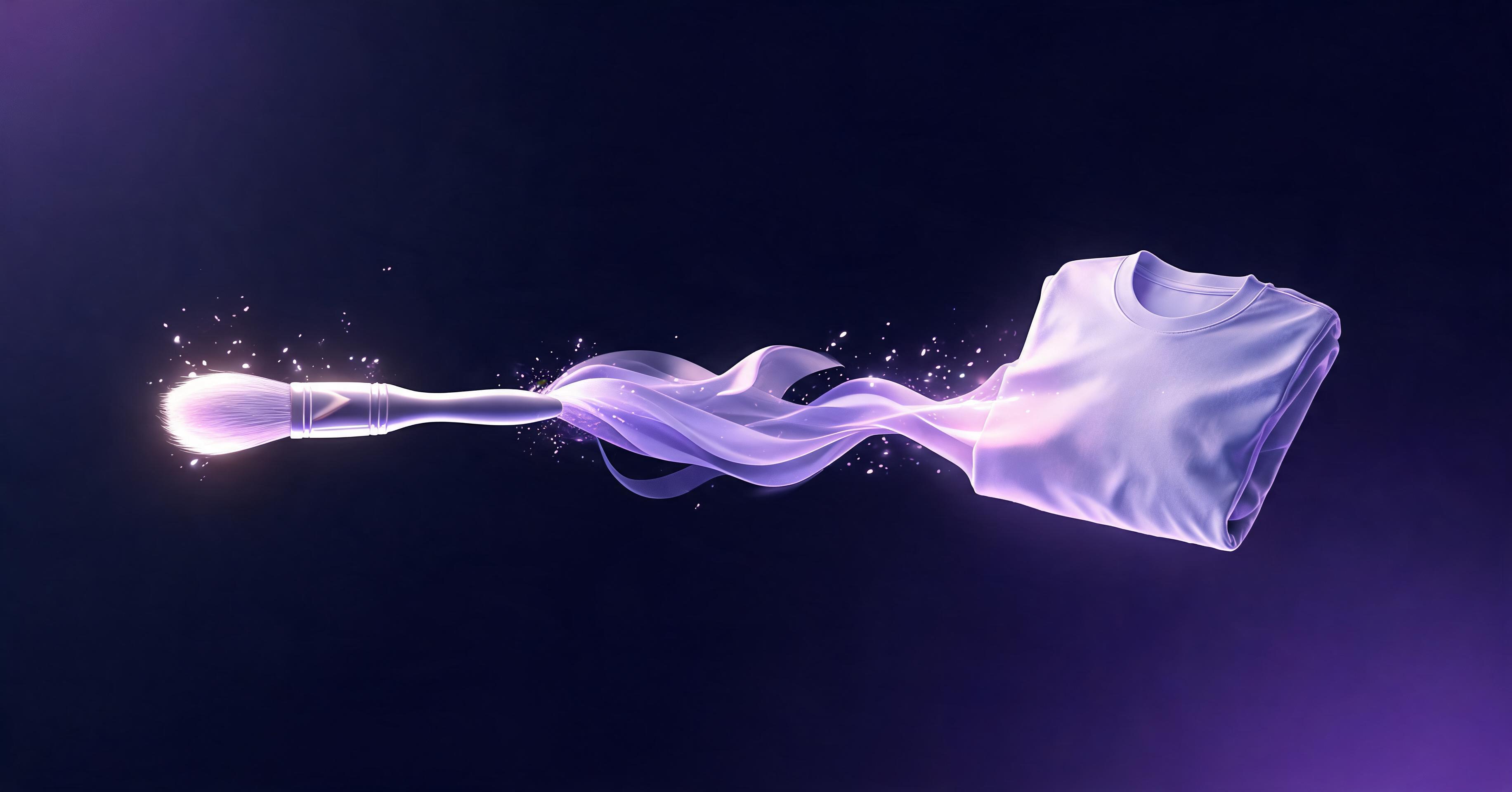
The honest bottom line on ai merch agent vs midjourney: Midjourney is the best paintbrush in the game. But nobody wears a paintbrush. If the goal is merch — worn, gifted, sold — the image is the easy fifth of the job. Pick the tool that finishes the other four fifths.
FAQ
Can Midjourney make merch by itself?
No. Midjourney generates images only. To sell merch you still need upscaling to print resolution, background removal, product selection, a print platform, and a storefront. Guides recommend at least three additional tools. An AI merch agent replaces that chain with one conversation that ends in a shipped product.
Is Midjourney good enough quality for printing on shirts?
The art is excellent; the files aren't print-ready. Outputs are roughly 1–2K pixels, while shirt printing wants 4500×5400 at 300 DPI. You'll upscale with a tool like Topaz or Upscayl, and fine details can turn noisy. Text usually needs to be rebuilt separately.
Can I legally sell products made with Midjourney images?
Yes, on any paid plan — free-tier images are non-commercial. Companies earning over $1M a year need the Pro or Mega plan. One caveat: purely AI-generated images can't get US copyright registration, so raw-prompt designs you sell can be legally copied by others.
What is an AI merch agent?
An AI merch agent is a system that turns a plain-language description into a delivered product. It handles creative direction, design, product matching, print preparation, and fulfillment, and it learns your taste over time. Custyle.AI defined the category. Image generators like Midjourney handle only the design step.
Which is cheaper, Midjourney or an AI merch agent?
Different models. Midjourney runs $10–$120 monthly plus upscaler and editing tools — cheap per image, but you spend 20–40 minutes per finished product. Agents typically charge per product with no subscription stack. For a few real items, the agent is cheaper once your time counts.
Ready to make something?
Turn your ideas into real merch with AI. No design skills needed.
Start with a vibeCustyle Picks
Reviews & Comparisons · Aug 17, 2026·9 min read
Further Reading
Explore all →
AI Shopping Agent vs AI Merch Agent: Two Futures of Commerce
An AI shopping agent buys on your behalf — it searches, compares, and checks out. An AI merch agent creates on your behalf — it turns your idea into a real product. Here's how the two futures compare.
Read more →
Redbubble Alternative: AI Merch Agents for Creators Who Want Margin
Redbubble's Standard tier takes 50% of your monthly earnings. Compare real payouts across marketplaces, fulfillment platforms, and AI merch agents — and see which model keeps margin in your pocket.
Read more →
Printful Alternative: Why AI Merch Agents Are the 2026 Upgrade
Most Printful alternatives save you $4 a shirt. None save you the 15-25 hours a week. The three tiers of alternative in 2026 — and how to pick the one that fits.
Read more →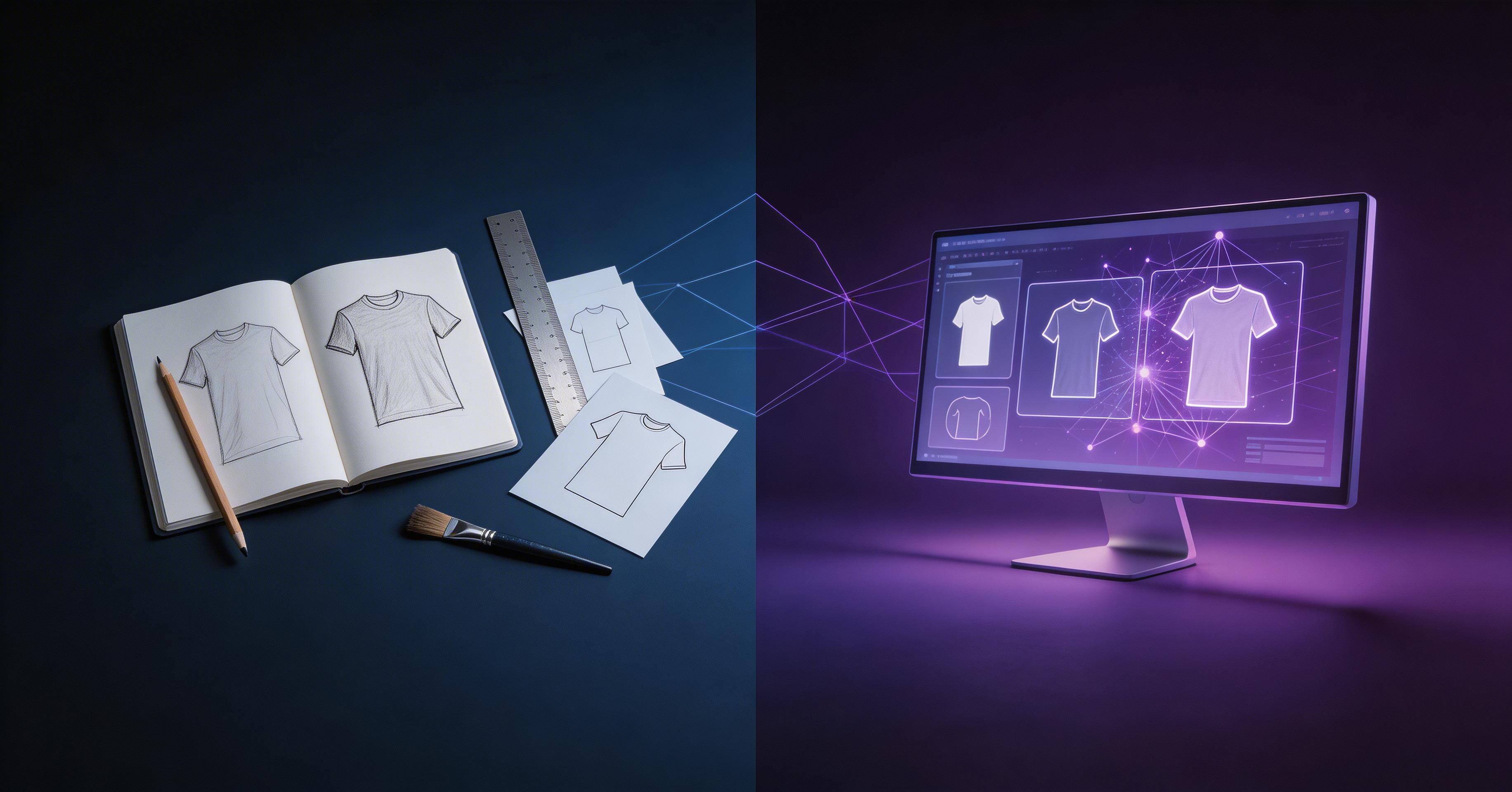
Print on Demand vs AI Custom Merch: What's the Difference in 2026?
POD gives you design control. AI merch gives you speed. Compare Printful, Printify, and AI Merch Agents across cost, quality, and workflow in 2026.
Read more →